Social Learning Platform Analysis
Why Instagram? Is Instagram really a Social Learning Platform?
I chose Instagram because I wanted to see how this assignment could change my perspective from viewing Instagram as just a social media platform. I wanted to see how a platform I normally use for entertainment and social purposes would be viewed under an educational lens. As a biology student, I think it’s quite interesting when creators can use short videos, diagrams, or posts to explain complex topics to reach a broader audience. For example, posts explaining why cutting onions causes tears connect scientific ideas to everyday experiences.
Instagram can be considered a social learning platform because users can do much more than just view information. They can share explanations, ask questions, discuss ideas, and connect with educational creators. This analysis considers how these opportunities support learning, while also examining how accessibility barriers, privacy concerns, and personalized recommendations can influence who participates and what they learn.
Analytical Framework
To evaluate Instagram as a social learning environment, I developed a framework using elements of Bates SECTIONS model, the Conversational Framework, and other related course concepts. I wanted the framework to focus on four criteria: learners and accessibility, interaction and media formats, networking, and privacy and algorithmic influences. By applying these four criteria together, we can examine how learners can access information, participate in exchanges, build learning connections, and navigate the platform’s design.
| Analytical Framework for Instagram | |
|---|---|
| Core criteria | Relevant Theories and Course Concepts |
| Learners and Accessibility | Students part of SECTIONS CAST UDL 3.0 (Perception and Display) |
| Interaction and Media Formats | Interaction part of SECTIONS Laurillard’s Media forms |
| Networking | Networking part of SECTIONS PLN’s Nguyen’s Epistemic Bubbles and Echo Chambers |
| Privacy, Learner Control, and Algorithms | Security and Privacy part of SECTIONS Boyd’s Networked Privacy UDL 3.0 Addressing Distractions |
- Learners and accessibility
This criterion uses Bates focus on learner demographics and access to evaluate how effectively Instagram supports learners with different needs. Additionally, it incorporates CAST’s Universal Design for Learning (UDL) Guidelines 3.0 by examining how short-form videos (like Reels) support multiple ways to perceive information (e.g., captions, text, diagrams).
- Interaction and Media Formats
This criterion adapts Bates “Interaction” criterion by using Diana Laurillard’s classifications of educational media forms. It evaluates whether Instagram functions as narrative media (a one-way broadcast of Reels/Posts) or supports communicative and productive media through comment sections, Direct Messages (DMs), and polls on stories.
- Networking
This criterion uses Bates Networking principles for education and incorporates Personal Learning Networks (PLN’s). PLNs are trusted connections that are formed to gather and share knowledge (Gutierrez, 2016). It uses C. Thi Nguyen’s framework to examine whether the algorithms on Instagram help users cultivate a diverse PLN or lock them into epistemic bubbles (where other viewpoints are omitted) or echo chambers (where outside voices are discredited).
- Privacy, Learner Control, and Algorithms
This section uses Bates “Security and Privacy” criteria by evaluating user safety. It also incorporates Dannah Boyd’s concept of networked privacy (recognizing that a person’s digital identity is socially distributed through what they are tagged in or share). Another aim for this criterion is to address algorithmic threats, biases, and distractions that disrupt learning (UDL 3.0 Considerations).
Learning on Your Terms?
Learners and Accessibility
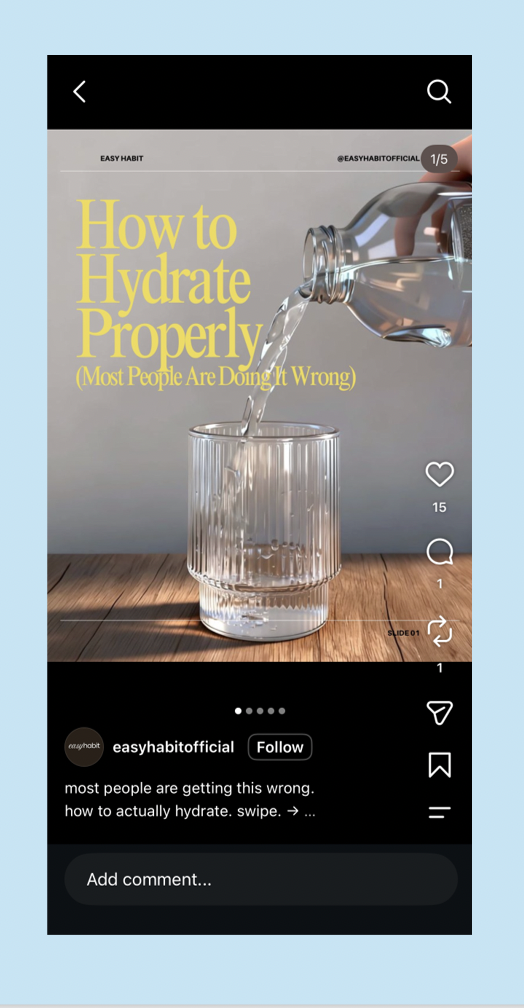
One thing I evaluated when analyzing learning diversity on Instagram was how content format choices impact learner control. For example, I compared this 45-second short-form video to a 6-slide post on the same topic. The Reel combined voiceover narration and animation of chemical reactions that occur when an onion is cut, whereas the post used step-by-step text blocks and static chemical illustrations. I think this example illustrates how Instagram offers content in both video and graphic formats, which supports UDL’s emphasis on illustrating through multiple media and providing different ways to perceive information (CAST, 2024). A learner who prefers self-paced reading can swipe through the post’s slides, whereas an auditory or visual learner can watch the Reel explanation.
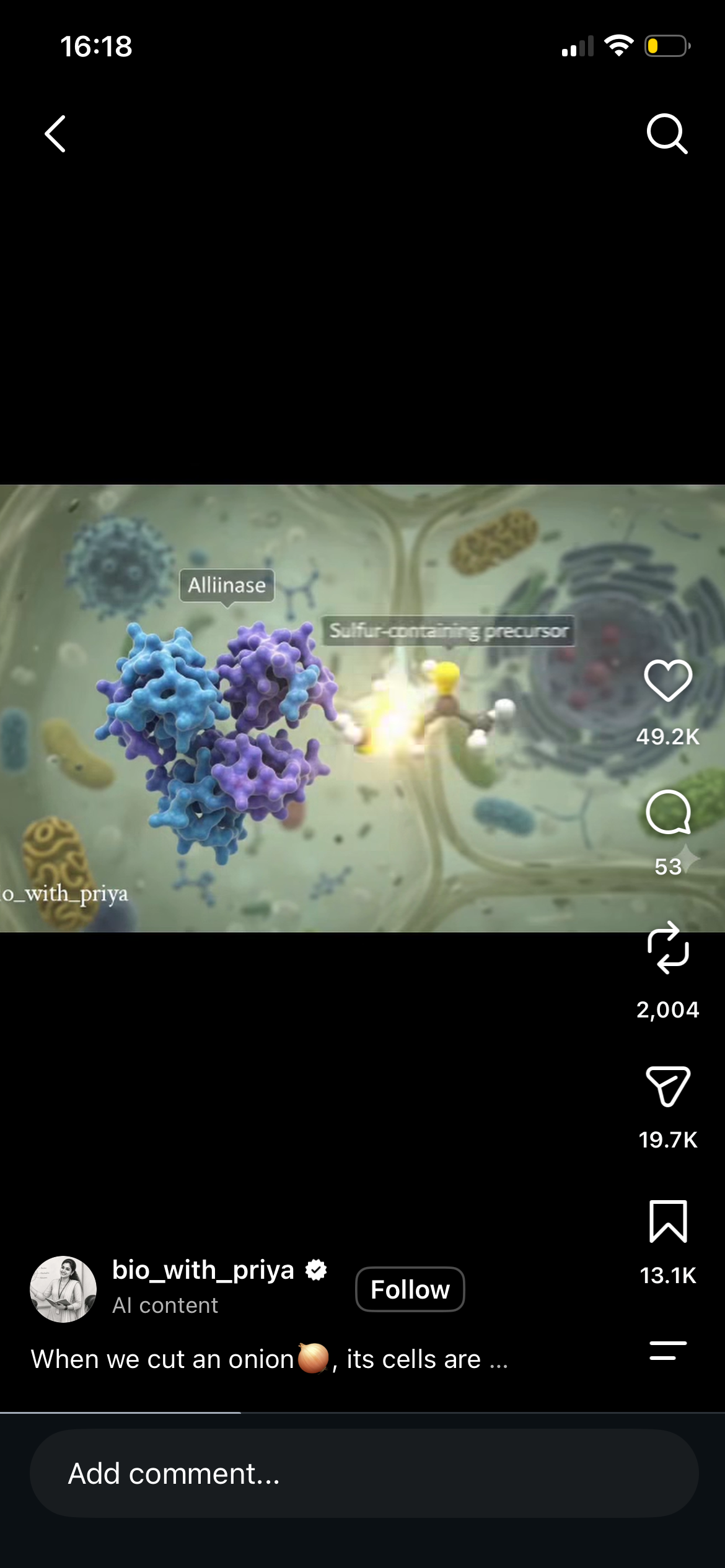
Figure 1. Above is a screenshot of a Reel and below is a screen recording of a multi-slide post. Both the Reel and the post explain the chemical reaction that causes onion-induced tears.
However, offering different formats does not necessarily give learners control over how information is displayed. Unlike video learning platforms like YouTube, which offer playback speed adjustments, transcripts that you can easily change the language, or closed-caption settings, Instagram’s Reel interface does not give much choice over playback settings. I could not easily change the playback speed on the Reel or change the font size on the post. Also, unless creators add captions directly to Reels or write image descriptions (alt text) for posts, important scientific information may not be accessible to everyone. Although Instagram supports different types of media, it offers limited ways to adjust how content is displayed to meet different learning needs (Bates, 2015; CAST, 2024).
From Watching to Participating…
Interaction and Media Formats
When evaluating how Instagram allows user interaction, I think that there are displays of both narrative media and communicative media. Reels and posts in your feed function primarily as narrative media, as they broadcast content one-way to passive viewers (Laurillard, 2002). On the other hand, comment sections, Direct Messages (DMs), and interactive Story stickers (such as Q&A boxes and polls) transform the platform into communicative media, which enables direct user-to-creator interaction.
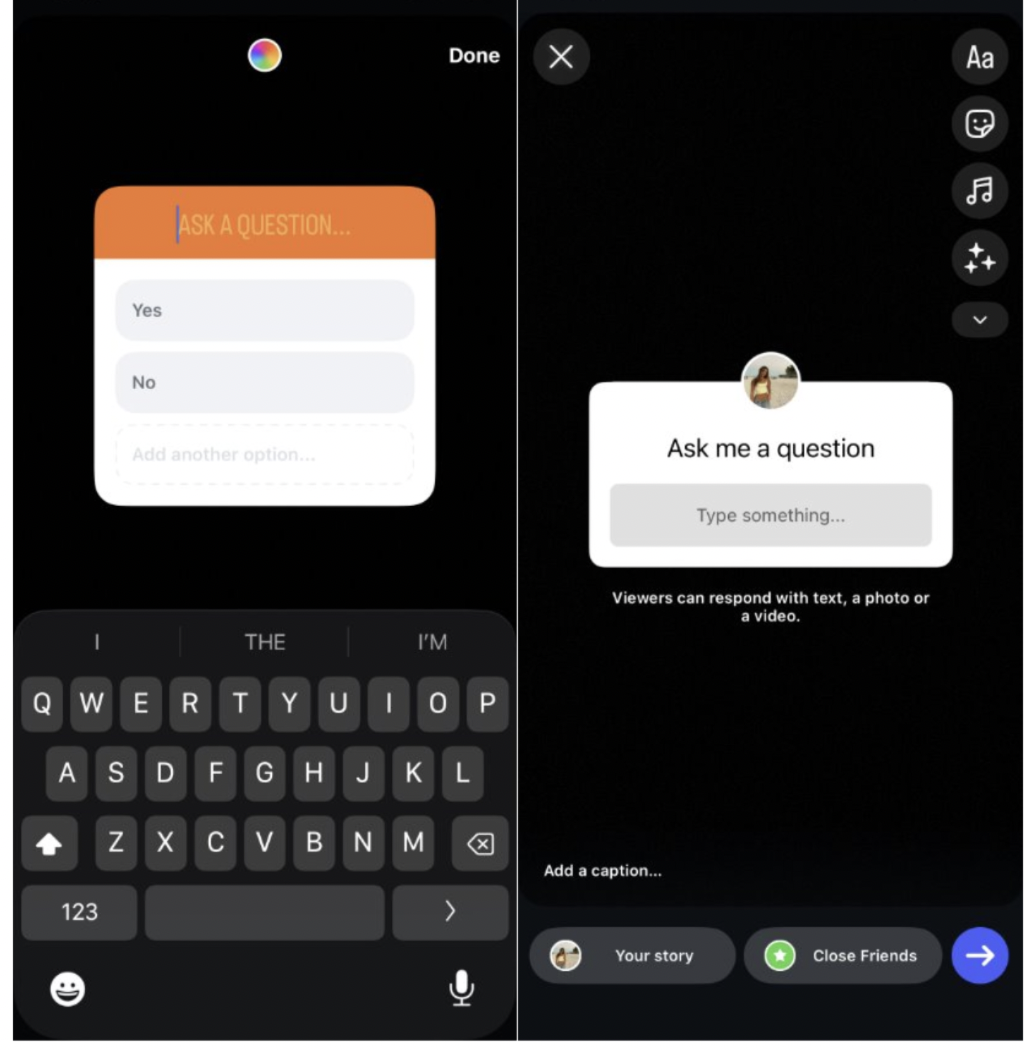
Figure 2. Screenshots showing how users can create polls and Q&A stickers as communicative media.
The Story poll feature invites viewers to choose an explanation before the creator reveals the answer. This creates an opportunity for learners to respond rather than only receive information. However, in a real polling situation, the screenshot demonstrates an opportunity for participation, not whether viewers understood the explanation, which is important to note.
Building Connections or Narrowing Perspectives?
Networking and Personal Learning Networks
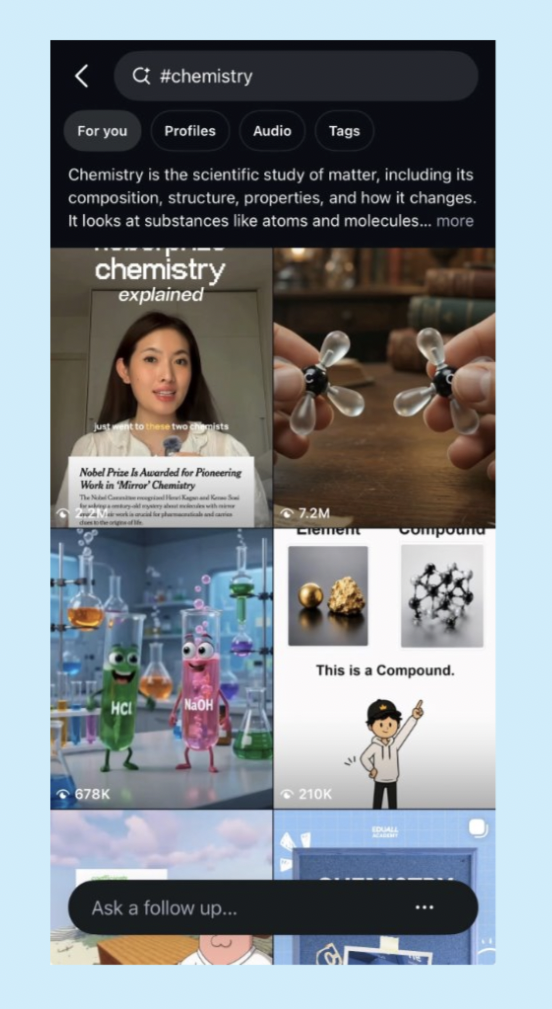
I think that Instagram provides strong affordances for cultivating a Personal Learning Network (PLN) by allowing users to follow educational accounts and search hashtags related to their interests. You can follow influential educators and businesses, as well as look at hashtags that can support whatever you are learning or want to learn, with the click of a button. However, I think that the algorithmic feed poses numerous risks that users should be aware of, such as epistemic bubbles and echo chambers. By continuously delivering content tailored to users’ engagement, we can easily be trapped in epistemic bubbles through the unintentional omission of counter-perspectives (Nguyen, 2020). Personalized recommendations can narrow the perspectives that learners encounter; this creates the perfect conditions for an epistemic bubble. When I was scrolling through my Explore page, I came across a lot of wellness posts that validate simplified health trends while omitting peer-reviewed medical studies or other scientific perspectives. Under C. Thi Nguyen’s framework, this operates as an epistemic bubble. The learner is not resisting medical science or rejecting doctors; instead, Instagram’s algorithmic curation is leaving out opposing evidence which confirms what the post is saying.
On the other hand, when I search specific educational hashtags like #chemistry or specific science accounts, I am actively curating a PLN based on my learning goals. However, once I switch over to the Explore feed, Instagram’s algorithm fully takes control, and it repetitively recommends content similar to what I previously liked while omitting a wider range of scientific topics, sources, and explanations or critical discussions.
Who’s in Control of Your Learning?
Privacy, Learner Control, and Algorithms
Evaluating Instagram through Bates’ (2015) “Security and Privacy” criteria highlights how platform algorithms can derail goal-directed social learning. To test how rapidly Instagram’s algorithm curates content based on minimal engagement, I conducted a small experiment. After watching and liking a single Reel about a dog, I refreshed my Explore page. Within just three refreshes, my feed was almost entirely replaced by dog-related posts and short-form Reels. While this rapid adaptation creates a highly personalized experience, it also illustrates the platform’s potential for algorithmic distraction. CAST’s UDL Guidelines emphasize reducing threats and distractions that interfere with learning (CAST, 2024). If we apply this to Instagram, this consideration raises questions about whether personalized recommendations and continuous scrolling help learners pursue their goals or redirect their attention.
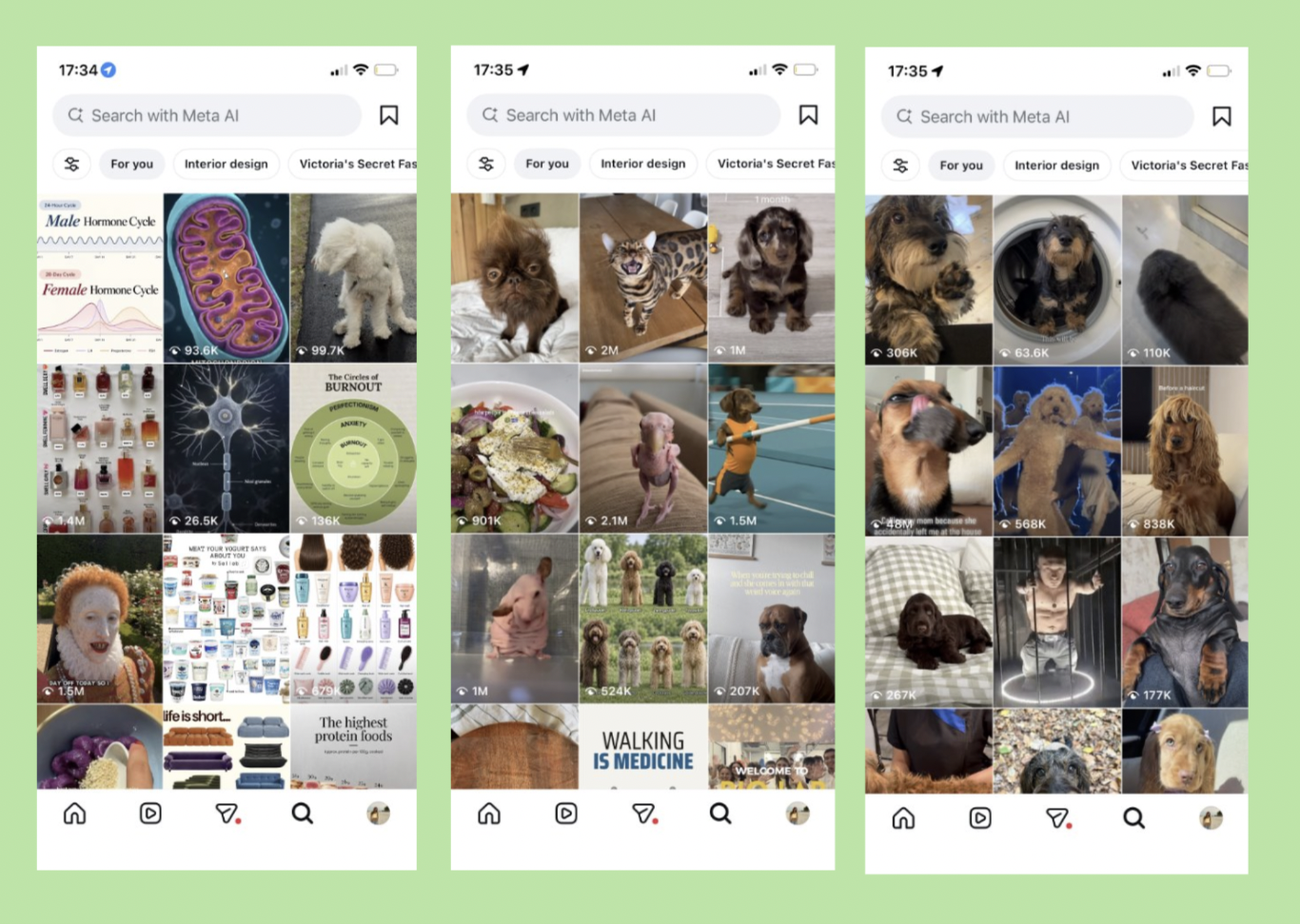
Figure 4a. Experiment demonstrating Instagram’s Explore feed algorithm adapting to a single post interaction within three page refreshes.
I think you can think of Instagram as operating within a complex ecosystem of networked privacy, where an individual’s digital footprint is heavily influenced by others through liked posts, public comments, and tagged photos (boyd, 2012). While Instagram provides privacy controls (such as setting an account to private), these features are not always intuitive. The settings that are shown in Figure 4b demonstrate how users can manage account visibility. I found these controls difficult to locate, which raises questions about how confidently a new user could manage their visibility when participating in educational discussions. In a social learning context, this lack of seamless privacy control can discourage learners from actively participating or creating content due to concerns about digital identity management (boyd, 2012).
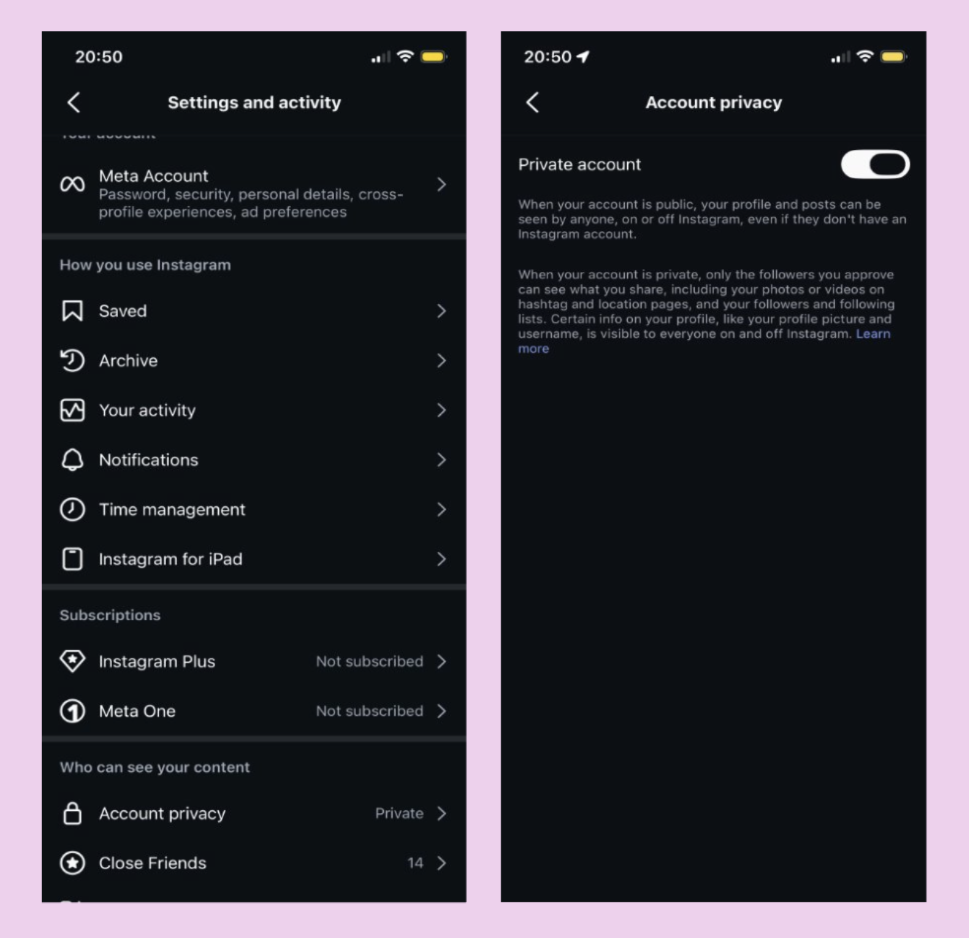
Figure 4b. Instagram’s privacy settings interface, showing controls for account privacy.
From Scrolling to Learning: My Key Takeaways
This analysis changed how I view a platform that I use regularly for entertainment and social connection. I can now recognize how Instagram can be used for informal learning. When we access educational content, this does not automatically mean we comprehend the content. For social learning to take place, we need active engagement. Active engagement requires that learners have opportunities to question explanations, explore multiple perspectives, and make intentional choices about how they participate (Laurillard, 2002). Instagram primarily benefits learners who are looking for brief, engaging introductions to complex topics. I think it can be useful as a supplemental tool that simplifies topics through multimodal media (CAST, 2024).
However, Instagram is a challenging space for learners who require display changes, video control, or feel uncomfortable participating in public spaces online. Personalized recommendations can help you discover relevant content, but they can also trap you in algorithmic distractions or even echo chambers.
Beyond Instagram, when evaluating any social learning platform, it is important to look at how the design affects learner agency (the ability to make purposeful, reflective, and strategic choices about one’s learning), not just the content that is available. Moving forward, I think it would be amazing if educational creators and platform designers prioritized universal accessibility and meaningful discussion to recognize that superficial engagement (like likes or views) does not demonstrate genuine understanding.
References
Bates, A. W. (2015). Teaching in a digital age: Guidelines for designing teaching and learning. BCcampus.
boyd, d. (2012). Networked privacy. Surveillance & Society, 10(3/4), 348-350.
CAST. (2024). CAST Universal Design for Learning Guidelines version 3.0. https://udlguidelines.cast.org.
Gutierrez, K. (2016, June 21). What are Personal Learning Networks? Shift eLearning.
Laurillard, D. (2002). Rethinking university teaching : a conversational framework for the effective use of learning technologies (2nd ed.). Taylor and Francis. https://doi.org/10.4324/9781315012940
Nguyen, C. T. (2020). Echo chambers and epistemic bubbles. Episteme, 17(2), 141-161.